Home › Parking Lot Repair & Replacement
Maintain a safe, professional property with expert parking lot repair in Phoenix, AZ. We handle pothole patching, crack repair, and full depth replacement for failing asphalt. Our team evaluates your lot and recommends targeted repairs or reconstruction to maximize safety and lifespan.
Precision Asphalt Phoenix provides professional parking lot repair throughout Phoenix, AZ, Arizona and the surrounding area. Our licensed, insured crew delivers safe, clean, on-time work with a free estimate before anything begins. Call (602) 603-4424 or request your free quote.
Parking lot repair in Phoenix that holds up to heat and heavy traffic
Most Phoenix parking lots do not fail overnight. They fail a little at a time from UV exposure, 115° pavement temperatures, and constant vehicle load. At Precision Asphalt Phoenix, we focus on repairing what can be saved and replacing only what truly needs it, so you get the longest life for every dollar you spend.
When we look at your parking lot, we are not just counting cracks. We look at how the base responds to heavy trucks, how water moves across the surface during a monsoon, where oil spots are softening the asphalt, and how the current layout works for your customers. From there we recommend a targeted parking lot repair plan or, when it no longer makes financial sense to patch, a full or partial replacement.
Because we work only in the Phoenix metro, we design repair and replacement scopes around local conditions. That means deeper compaction in areas used by dumpsters and delivery trucks, UV-resistant sealants in high-exposure sections, and attention to shade patterns that cause uneven aging. This local focus is what keeps repaired areas from popping back open after the first brutal summer.
How we evaluate your parking lot before recommending repair or replacement
Before Precision Asphalt Phoenix takes on any parking lot repair or replacement, we complete a structured assessment. This is what you can expect when we walk your property.
First, we check surface condition. We identify alligator cracking, longitudinal and transverse cracks, raveling, potholes, rutting, and depressions. Each type of distress points to a different underlying cause, from simple surface aging to base or subgrade failure.
Second, we probe the base. In failed areas we core or saw small test sections to see how thick the existing asphalt is and whether the base rock is stable or pumping mud. Many lots in Phoenix were built decades ago with thin sections that no longer handle today’s traffic loads. Knowing the real thickness and base quality lets us decide whether structural overlays are feasible or if milling and full-depth replacement are necessary.
Third, we study drainage and grading. We look for birdbaths that hold water after irrigation or storms, low spots near building entrances, and areas where water crosses pedestrian paths. Standing water is a major cause of rapid asphalt breakdown in our climate. Repair plans usually include correcting these low areas, not just filling potholes.
Finally, we review usage: where trucks turn, where employees park all day, how drive-thru lanes move, and which entries see the highest traffic. These patterns are critical. A lot that looks similar on paper can require thicker pavement or more robust repair methods in a few specific zones so you are not constantly patching the same sections.
Targeted parking lot repair options and how each one works
Parking lot repair at Precision Asphalt Phoenix is not one-size-fits-all. We match the method to the problem so you are not overpaying for minor issues or under-fixing structural failures.
Crack sealing: For working cracks that are not tied to base failure, we mechanically clean the crack, dry it, and then apply a hot rubberized sealant formulated for Arizona temperatures. Proper crack sealing keeps water out of the base and slows the spread of cracking. We avoid banding cracks excessively so the lot still looks professional.
Pothole and patch repairs: For isolated potholes or failed panels, we saw cut a neat rectangle around the damaged zone, remove loose asphalt and compromised base, recompact or replace the base rock, then install new hot mix asphalt that matches the existing thickness. We compact in tight passes to lock the patch into surrounding pavement. When many patches cluster in the same area, we typically recommend a larger dig out or partial replacement instead of endless band-aids.
Skin patches and surface repairs: In some aged Phoenix lots, the top 1 to 2 inches of asphalt is oxidized and brittle but the base still holds. In those cases we may recommend milling a shallow layer and installing a thin overlay rather than a full structural rebuild. This restores a smooth, dark surface and improves curb appeal while controlling cost.
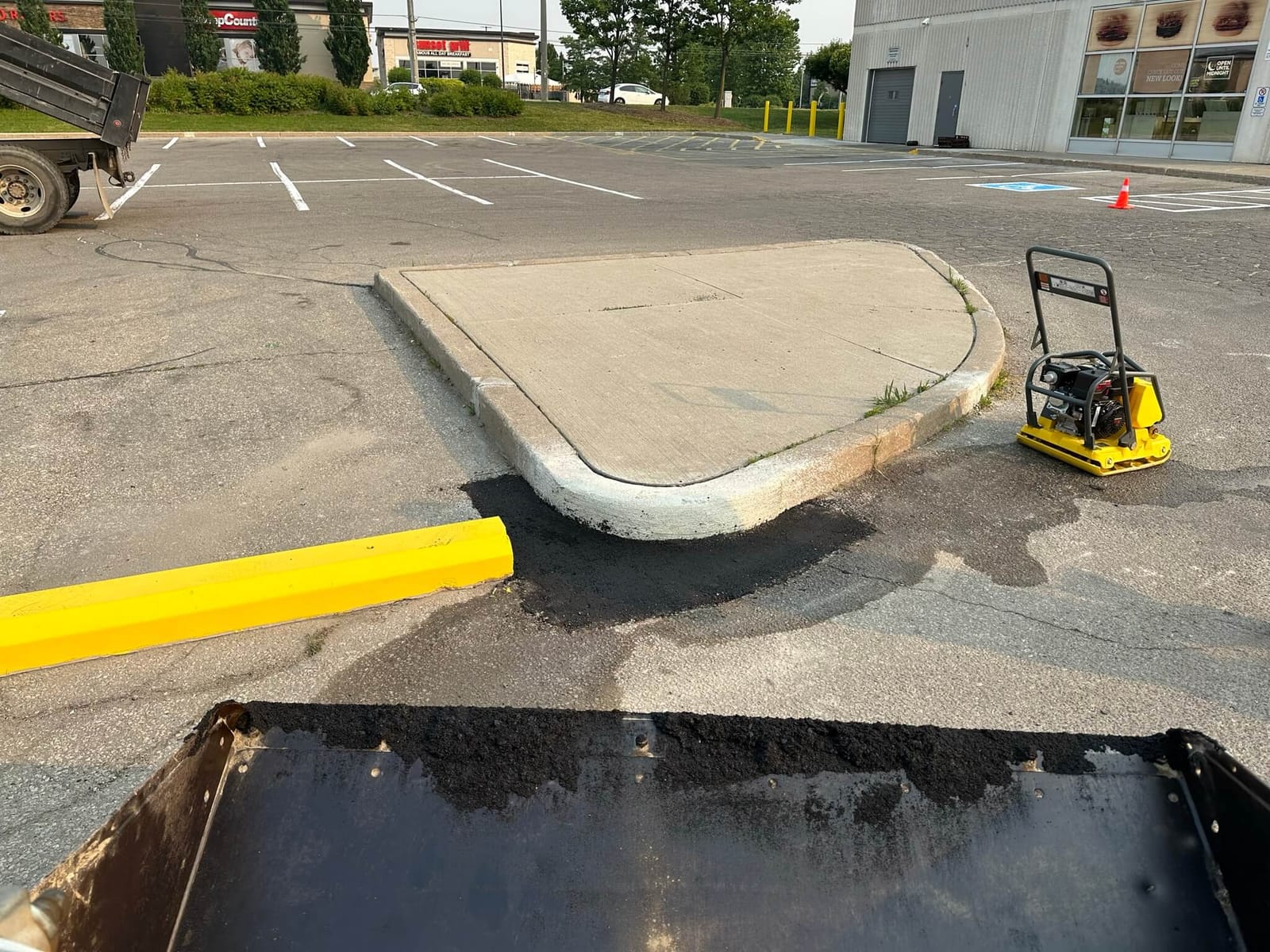
Trip hazard and drainage corrections: Where sidewalks meet asphalt or where tree roots lift sections of pavement, we can grind, level, or remove and replace localized areas to remove tripping hazards and improve ADA accessibility. When water ponds in predictable locations, we create localized grading corrections as part of the repair so the same spots do not keep failing.
Full or partial parking lot replacement and overlay strategies
When a parking lot is near the end of its useful life, repair alone becomes a revolving expense. Precision Asphalt Phoenix helps you decide between full-depth replacement, partial reconstruction, and structural overlays based on your specific site conditions and budget.
Full-depth replacement: We typically recommend full replacement when more than about 30 to 40 percent of the lot has structural failure or when the base shows widespread pumping and movement. We mill or pulverize the existing asphalt, remove unsuitable material, rebuild the aggregate base to the proper thickness and compaction, then place new asphalt in one or more lifts. For heavy truck areas such as loading docks, we often increase asphalt thickness or recommend concrete pads.
Partial reconstruction: Some Phoenix properties have predictable failure zones: dumpster enclosures, delivery lanes, fire lanes, and drive-thru loops. In these cases we can reconstruct only these structural hot spots while using overlays or surface treatments on the rest. This approach keeps the budget focused where the structural demand is highest.
Structural overlays: If the base is generally stable but the surface is aged and cracked, a mill and overlay may be more economical than full replacement. We mill off 1.5 to 3 inches of old asphalt, address any exposed weak areas or base failures, then install a new asphalt layer that restores strength and smoothness. Correcting grades during milling is important in Phoenix since intense monsoon events expose any drainage flaws.
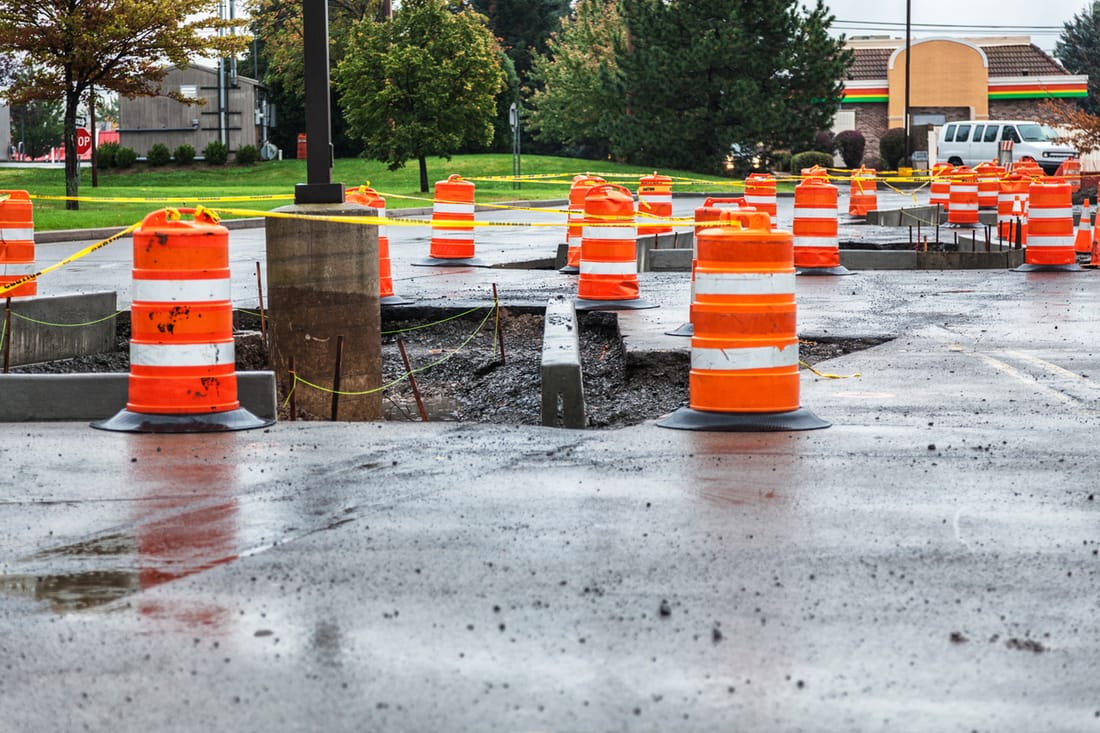
Phased work: For busy retail centers and medical offices, we often phase replacement over multiple nights or weekends, keeping a portion of the lot open at all times. We coordinate signage, barricades, and temporary striping so customers can still find parking and safe walk paths while the project is underway.
What drives parking lot repair cost in Phoenix and how to control it
Several specific factors determine what you will pay to repair or replace a parking lot in Phoenix, and knowing them helps you make better decisions.
Thickness and structure: More asphalt and more base rock means higher cost, but cutting thickness to save money usually shortens pavement life. At Precision Asphalt Phoenix, we size pavement sections based on actual loads, like trash trucks, delivery semis, or school buses, not rough guesses.
Site access and phasing: Tightly packed complexes, gated communities, or lots that can only be worked at night increase labor and equipment time. If you can allow daytime work in certain areas or provide a clear staging area for equipment and materials, you can typically save money.
Drainage corrections: Grinding, leveling, or regrading low spots adds cost but prevents repeat failures. In Phoenix, poor drainage plus heat is the fastest way to destroy asphalt. We are direct about where it is worth fixing drainage and where you can live with minor imperfections without premature failure.
Scope clarity: The more clearly the repair limits and expectations are defined up front, the fewer change orders you face. Our proposals spell out saw cut limits, thicknesses, materials, and included line striping so you can compare them accurately with any other bids.
Maintenance planning: We often structure projects with a 1 to 3 year maintenance plan that includes sealcoating and crack sealing. Spending a small amount on scheduled maintenance after replacement is usually far cheaper than major structural repairs five years later.
Working with Precision Asphalt Phoenix from first visit to final striping
Our process is designed for property managers, HOAs, and business owners who do not have time for surprises.
Initial consult and walk-through: We meet you on site, walk the lot, mark out problem areas, and discuss traffic patterns, business hours, and any known underground utilities or irrigation. If you have prior reports or engineering studies, we review those with you.
Detailed proposal: Within a short time frame, Precision Asphalt Phoenix provides a written scope that includes repair types, areas mapped or described clearly, target thicknesses, material specs suitable for Phoenix heat, and a realistic schedule. You will know exactly what is included, from barricades to striping and signage.
Scheduling and communication: Before work begins, we coordinate dates, phasing, and notices for tenants or customers. We can provide simple site maps for you to email or post, showing which sections close on which days.
Execution: Our crews handle milling, grading, base work, paving, compaction, and cleanup. A supervisor is available on site or by phone to answer questions and adjust staging if unexpected issues arise, like unmarked irrigation lines or soft subgrade.
Striping and final walkthrough: Once the asphalt has set enough for paint, we stripe stalls, ADA spaces, fire lanes, and any specialty markings. We confirm that traffic flow and signage match your needs and make small adjustments if needed. Before we leave, you receive basic care guidelines, including when to reopen to light and heavy traffic and how to protect the new surface during the first Phoenix summer.