Home › Commercial Asphalt Resurfacing & Overlays
Refresh aging pavement with commercial asphalt resurfacing in Phoenix, AZ. We install overlays on sound existing lots to smooth ruts, oxidation, and surface cracking while minimizing downtime. Our crew plans phasing to keep your business accessible and delivers a uniform, long lasting finish.
Precision Asphalt Phoenix provides professional commercial asphalt resurfacing throughout Phoenix, AZ, Arizona and the surrounding area. Our licensed, insured crew delivers safe, clean, on-time work with a free estimate before anything begins. Call (602) 603-4424 or request your free quote.
Commercial Asphalt Resurfacing & Overlays for Phoenix Properties
Parking lots and private roads in Phoenix take a beating from extreme heat, seasonal monsoons, and heavy traffic. Commercial asphalt resurfacing and overlays give you a way to restore a worn surface without paying for a full tear-out and replacement. Precision Asphalt Phoenix focuses specifically on commercial properties in the Valley, so we design each overlay to handle local temperatures, water flow, and traffic patterns.
Resurfacing is ideal when the top layer is cracked, oxidized, or rough, but the base underneath is still structurally sound. Instead of removing every inch of asphalt, we repair localized failures, then place a new asphalt layer on top. This restores smoothness, curb appeal, and drainage while keeping your business open with fewer interruptions.
We regularly resurface shopping centers, HOA streets, office and medical complexes, industrial yards, schools, and churches across Phoenix, Glendale, Tempe, and neighboring cities. The goal is always the same: extend the life of your existing pavement by 8 to 15 years, reduce ongoing patching costs, and create a surface that stays safe and attractive in Arizona conditions.
Our Step-by-Step Commercial Resurfacing Process
Before Precision Asphalt Phoenix recommends an overlay, we perform a detailed condition assessment. We walk the full site, identify structural vs cosmetic cracking, look for base failures, depressions, drainage issues, and measure the existing asphalt thickness in multiple locations. In many cases we also core sample or saw-cut small test areas to verify that the base and subgrade can support a new asphalt layer.
If resurfacing is appropriate, we start with preparation. This includes power cleaning the pavement with brooms and blowers, clearing debris from joints and cracks, and cutting failed sections. Oil spots are either removed or treated with an oil-spot primer so the new asphalt can bond properly. Any areas with alligator cracking, severe rutting, or soft spots are cut out and patched with new base and asphalt, rather than simply covered.
Next, we address drainage and transitions. We check slopes toward catch basins, valley gutters, and retention areas and make grade adjustments where needed so that the overlay does not trap water. At entries, ADA ramps, and around dumpster pads or dock areas, we may mill the existing asphalt (cold-plane it) to maintain curb reveal and keep thresholds at proper elevations.
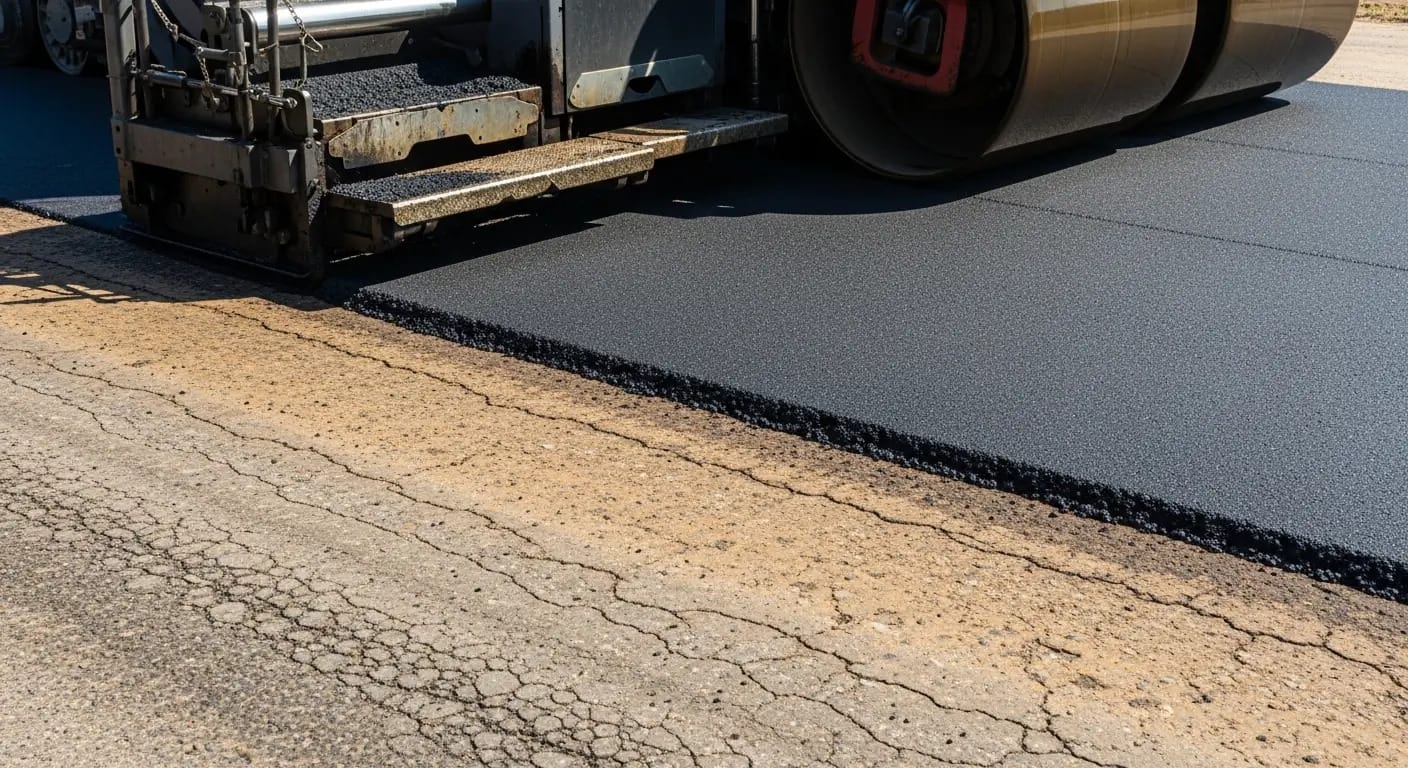
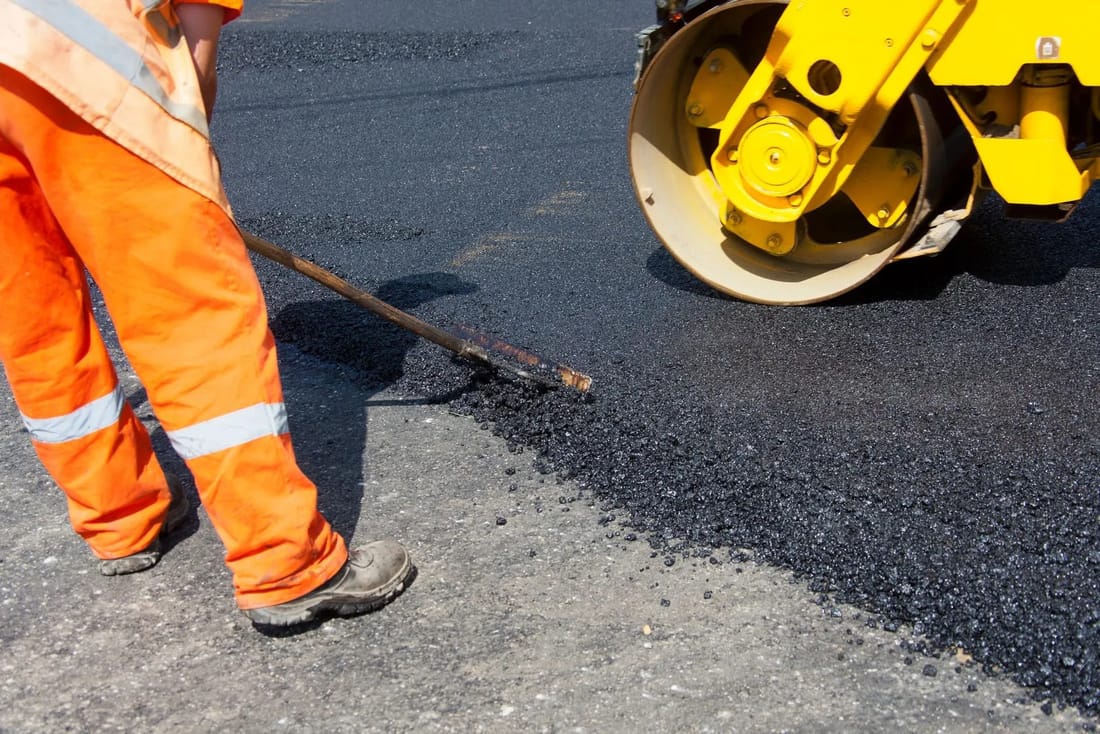
Once the surface is prepared, we apply a tack coat, a thin layer of asphalt emulsion that helps the new overlay bond to the old surface. This is critical in Phoenix, where high pavement temperatures and traffic can shear a poorly bonded overlay. Then we place the new asphalt wearing course using a self-propelled paver for consistent thickness and smoothness, followed by steel and rubber-tire rollers to achieve the right compaction. We finish by adjusting utilities like valves or manholes, cutting clean joints where the new work meets existing pavement, and then re-striping and signing the lot to match or improve your traffic flow.
Overlay Design Choices: Thickness, Mixes, and Traffic Loads
No two commercial overlays are exactly the same. Precision Asphalt Phoenix designs each resurfacing project around the way your pavement is actually used. Light-use office or medical parking lots can often be resurfaced with 1.5 inches of new asphalt, while grocery centers with frequent delivery trucks or industrial yards may need 2 to 3 inches, sometimes in multiple lifts, to resist rutting and shoving.
We select asphalt mixes that perform in Phoenix heat. This usually includes polymer-modified or higher-grade binders that resist softening in 115-degree temperatures and slow oxidation from UV exposure. For high-load areas like drive lanes, dumpster pads, fire lanes, and service docks, we may specify a stiffer mix or thicker section, even if the general parking stalls get a standard surface.
Our team also considers your business operations. If you have peak evening traffic, drive-thru stacking, or frequent delivery windows, we plan joint locations and phasing so that new overlay sections are not stressed before they have cooled and gained strength. For HOAs and private communities, we coordinate with management to position joints at logical points like street intersections, entry gates, or behind speed humps to reduce visual impact and future crack reflection.
Where existing asphalt is very oxidized on top but structurally sound at depth, we can sometimes mill a thin layer, then place a slightly thicker overlay to restore structural capacity without raising elevations too much. These design choices, all tailored to Phoenix conditions, determine how long your resurfaced pavement will actually last.
What Affects Cost for Commercial Asphalt Resurfacing in Phoenix
Several specific factors drive the price of commercial asphalt resurfacing. The most obvious is the square footage of pavement being treated, but the details matter more than many owners realize. The thickness of the overlay and the amount of base or patch repair required under the new mat usually have the largest impact on cost and long-term performance.
If your lot has many localized failures, such as alligator cracking or deep potholes, we must saw-cut those areas, remove failed material, rebuild the base, and patch them before the overlay goes down. This adds cost but prevents the same failures from reflecting back through your new surface within a couple of years. Extensive milling at entrances, in front of roll-up doors, or around drainage structures can also influence pricing, because milling mobilization and disposal add to the project.
Access and phasing are another major factor for Phoenix commercial sites. If your business has to stay open, we design multi-phase plans, often working early mornings, evenings, or weekends to keep critical lanes and entries open. This can increase labor time, but it reduces the impact on your operations and avoids towing or conflict with customers.
Material choices matter too. Using a higher performance PG binder or polymer modified mix costs more per ton than basic hot mix, but in our climate, it can significantly reduce rutting and raveling, extending the life of your overlay. We walk you through these options up front so that your budget aligns with how long you plan to own or manage the property.
Finally, striping and ADA compliance improvements after resurfacing can affect your total project cost. If you want to reconfigure parking, add EV stalls, or bring accessible routes up to current standards, we can incorporate that planning into the resurfacing proposal so there are no surprises later.
Common Phoenix Pavement Problems and How Overlays Solve or Avoid Them
Phoenix asphalt has a distinct set of issues tied to climate and local construction practices. Prolonged UV exposure leads to surface oxidation, making pavement brittle, gray, and more prone to cracking. Heavy monsoon rains then exploit those cracks, washing out fine material below and leading to potholes and depressions. Precision Asphalt Phoenix addresses these realities before placing an overlay so that problems do not simply reappear.
One common issue is reflective cracking, where existing cracks underneath transmit straight through the new overlay. To manage this, we clean and fill larger cracks, sometimes use reinforcing fabrics or grids over problem joints, and adjust overlay thickness in critical areas. Although no method can guarantee zero reflective cracks, proper prep and design significantly delay their return.
Another Phoenix-specific concern is ponding water after storms. If we simply add asphalt on top of an already flat or low area, the problem gets worse. Instead, we correct birdbaths by milling low spots, adding structural patching where needed, then paving with improved slope toward drains or gutter lines. In some cases, we recommend minor concrete work, such as new valley gutters, to permanently guide water away from asphalt.
Fuel and oil damage is also common in commercial lots around drive-thrus, loading zones, and in front of convenience stores. Before resurfacing, we either remove severely contaminated asphalt or treat it with specialty primers. For truck courts and fueling areas, we may suggest thicker asphalt or reinforced concrete panels in the highest exposure zones so that the surrounding overlay is not undermined over time.
By addressing these issues upfront, your new commercial asphalt resurfacing does more than just look fresh. It functions better and stands up longer in real Phoenix conditions.
What Phoenix Property Managers Should Know Before Hiring
Choosing the right contractor for commercial asphalt resurfacing in Phoenix is primarily about experience with local conditions, traffic management, and codes. Precision Asphalt Phoenix is familiar with city of Phoenix and surrounding municipality requirements for dust control, off-site tracking, and work-zone safety, including obtaining and posting NOIs or dust permits when required. For private commercial lots and HOA streets, formal permits are not always needed, but compliance with fire lane access, ADA slopes, and signage is still critical.
Before you request bids, it helps to prioritize your goals. Decide whether you want to maximize lifespan, minimize short-term cost, reconfigure traffic flow, or simply refresh appearance before a sale or refinance. Share this with us, and we can recommend overlay thicknesses, phasing strategies, and striping layouts that fit your plans. We often suggest a pavement maintenance schedule that pairs resurfacing with future sealcoats, crack sealing, and periodic inspections to protect your investment long term.
Ask any contractor how they will handle access and communication during the project. On commercial sites, we provide clear phasing maps, tenant notices, and suggested email or portal content property managers can send to occupants. We define which entrances will be open on which days, where towing will be enforced, and when striping will be completed so everyone knows what to expect.
Finally, review the scope in detail, not just the bottom-line price. Make sure the proposal explains overlay thickness, the amount and type of base repair, how many linear feet of crack treatment are included, whether milling is part of the work, and what mix design will be used. A cheaper quote that skips proper preparation can cost far more later. When you work with Precision Asphalt Phoenix, we spell out these details in plain language so you can compare options confidently and choose a resurfacing solution that fits your Phoenix property for years to come.