Home › Asphalt Sealcoating & Crack Filling
Protect your driveway from sun, oil, and wear with professional asphalt sealcoating in Phoenix, AZ. We clean the surface, fill cracks, and apply a rich, even coat of sealer that extends pavement life. Regular maintenance keeps your asphalt looking fresh and helps avoid costly repairs.
Precision Asphalt Phoenix provides professional asphalt sealcoating throughout Phoenix, AZ, Arizona and the surrounding area. Our licensed, insured crew delivers safe, clean, on-time work with a free estimate before anything begins. Call (602) 603-4424 or request your free quote.
Practical Asphalt Protection for Phoenix Heat
In Phoenix, asphalt does not fail the same way it does in cooler, wetter places. The brutal sun, hot tires, and sudden monsoon storms all hit your pavement hard. Without a proper sealcoat and timely crack filling, your blacktop can dry out, turn gray, ravel at the surface, and develop wide cracks that let water reach the base. Once the base is damaged, you are looking at patching or full replacement instead of simple maintenance.
Precision Asphalt Phoenix focuses on asphalt sealcoating and crack filling that is tuned specifically for our desert conditions. We work on commercial parking lots, small retail centers, HOA roads, and residential driveways anywhere in the Phoenix metro. Our approach is straightforward. Protect the surface from oxidation, keep water out of the base, and give you a finish that looks professional and is easy to stripe and maintain.
For many Phoenix property owners, the right timing is every 3 to 5 years for sealcoating and at the first sign of linear cracking for crack filling. If your asphalt is under 12 months old, we typically recommend waiting until it has fully cured before sealcoating. If the pavement is older and already has fatigue cracking, we will explain whether crack filling can help or if those areas are too far gone and need structural repair before any coating goes on.
How Our Asphalt Sealcoating Process Works
Good sealcoating is more than spraying black liquid and leaving. At Precision Asphalt Phoenix, we follow a consistent process that is designed to bond well in our climate and last as long as possible.
First, we walk the site with you and mark problem areas. This includes oil spots, bird baths (low areas where water sits), raveling, and any cracks that need treatment before coating. We then schedule the work for a weather window that fits our needs and yours. For example, we avoid sealcoating on days with high wind or when there is a chance of monsoon storms, since dust and rain can ruin a fresh coat.
On the day of the job, we power clean the surface using blowers, brooms, and, if needed, pressure washing in high traffic or greasy areas. Any oil spots are treated with a primer so the sealcoat can actually stick instead of peeling later. We then rope off or cone off the work area so traffic is controlled and your tenants or customers know where they can and cannot drive.
Next, we apply the sealer. In Phoenix we typically use a high quality asphalt emulsion sealer that is designed for high UV exposure. Depending on the condition of the pavement and the use of the lot, we will recommend one or two coats. A light residential driveway might get one heavy coat. A busy commercial lot where delivery trucks turn frequently will usually get two coats applied in different directions for more even coverage. Application is done with spray, squeegee, or a combination, depending on the layout. Squeegees help work material into rough or porous areas, while spray provides an even finish on larger open spaces.
Cure time matters in our heat. While the surface may look dry very quickly, we generally recommend keeping traffic off for at least 24 hours, longer if we have applied heavier coats or if shading slows the drying in certain sections. Before we leave, we walk the site again, check coverage and edges, and make sure your access plan for reopening the area is clear.
Crack Filling That Keeps Water Out, Not Just Fills a Gap
Cracks are the first real warning sign that your asphalt is starting to separate or the base is moving. In Phoenix, we see a lot of linear cracks from thermal expansion and contraction, and also block cracks that show the surface is aging. If you ignore them, water and fine debris work into the gaps, which leads to more cracking and eventually potholes.
Our crack filling process starts with separating the cracks that can be sealed from those that indicate deeper structural problems. Hairline surface checking usually gets treated with the sealcoat alone. Cracks that are about a quarter inch wide or more are cleaned and filled. If we find alligator cracking, which looks like a spiderweb of small connected cracks, we will talk to you about patching those sections instead, since filler alone will not hold there.
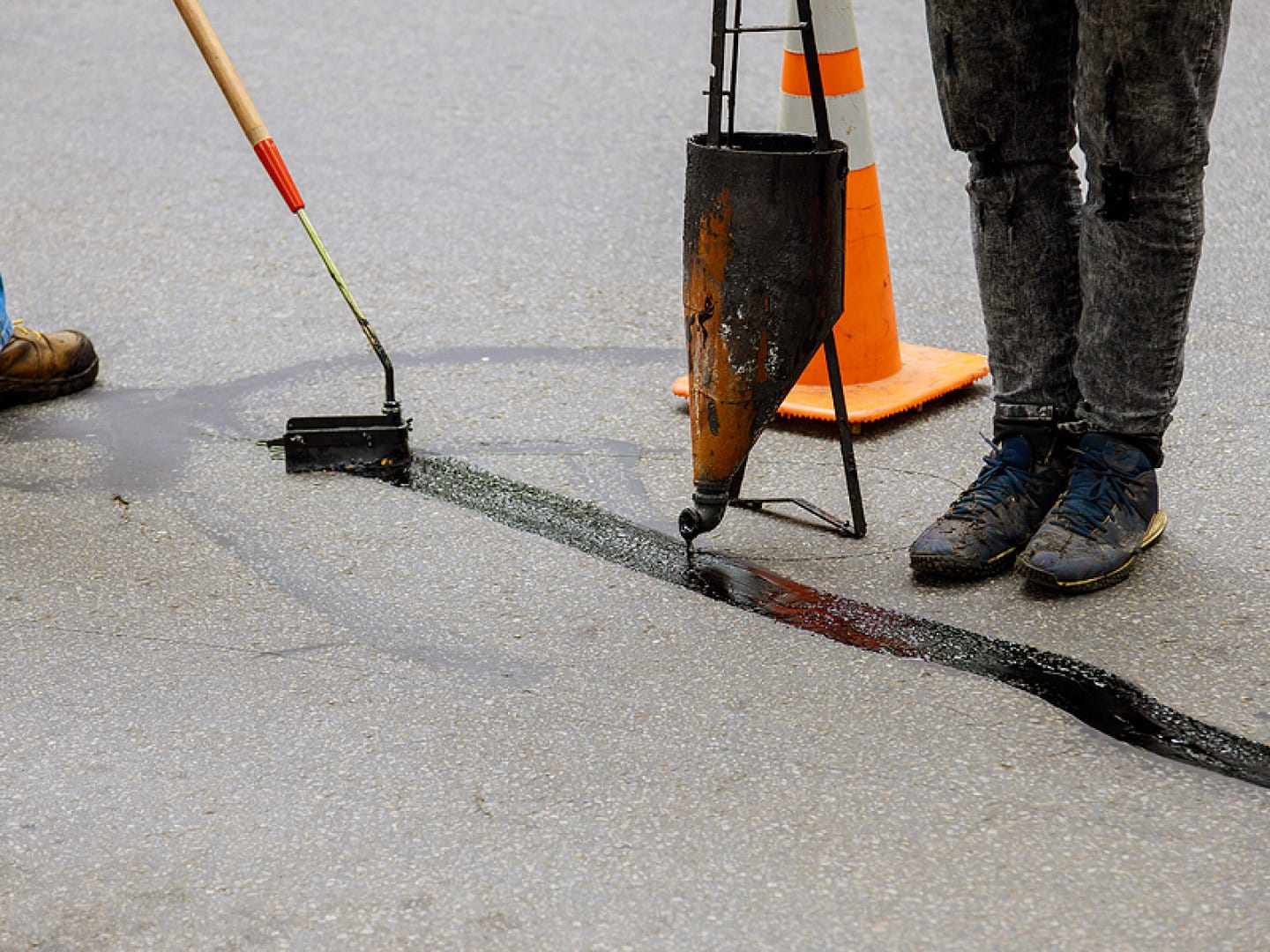
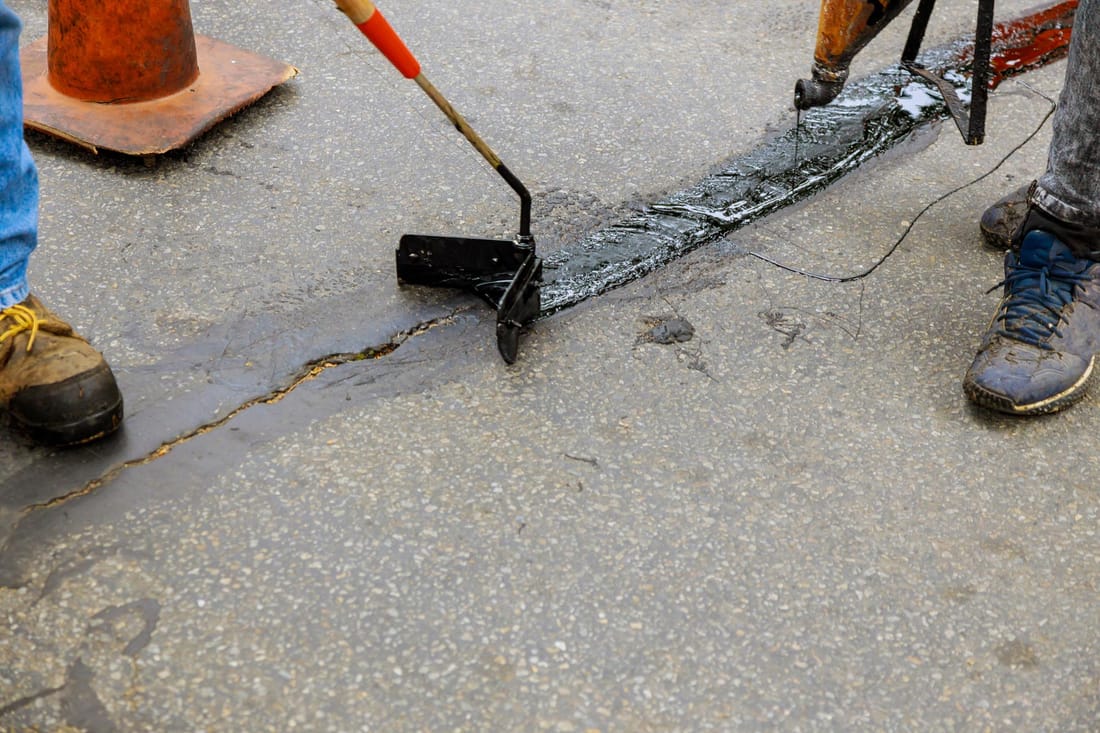
To prepare the crack, we use high pressure air and wire brooms to remove dust and loose material. In some cases we use a router to open and square the crack so the filler can sit correctly and flex. For most parking lots and driveways we use a hot applied rubberized crack sealant. It is heated in a kettle, then poured or applied with a wand directly into the crack, slightly overfilling so it can be struck off and leveled. As it cools, it bonds to the crack walls and remains flexible enough to handle Phoenix temperature swings.
Timing is important. Crack filling is usually done before sealcoating so the sealer can bridge lightly over the filled crack and make a more uniform appearance. In very wide or deep cracks, we may install a backer material first to avoid wasting sealant and to help the joint flex correctly. Where vehicles will turn sharply, such as at entrances and loading areas, we may adjust the filler choice or application method to reduce scuffing and pickup.
What Affects Cost And Scheduling For Phoenix Properties
People often ask why one asphalt sealcoating quote is higher than another. For Precision Asphalt Phoenix, the price is tied directly to what it takes to do the job correctly in our environment.
Square footage is the main driver, but the condition of the asphalt is just as important. A newer, smooth lot that only needs one coat and light crack filling will cost less per square foot than an older surface that needs extensive crack routing, two coats, and oil spot priming. If the asphalt is very dry and porous, it will absorb more material, so we factor that into the estimate.
Layout and access also affect cost and schedule. Tight courtyards, lots with many islands, and properties that must stay partially open require more hand work and staging. For large commercial sites, we often phase the project so one section stays open for parking while we work on another. This can add to labor time, but it avoids shutting down your business. We plan phasing with you, often scheduling high traffic areas for evenings or weekends when possible.
Local weather and seasonal demand matter too. In Phoenix, late spring and fall are prime times for sealcoating because temperatures are high enough for curing but not at summer extremes all day. During peak season, lead times can be a couple of weeks. During hotter months, we may adjust start times to early morning so the material lays properly and crews are not applying in the hottest part of the day.
When we give a quote, we spell out how many coats of sealer we are using, what type of crack filler we are applying, and how much prep is included. That way you can compare line by line instead of only looking at a square foot price that does not tell the whole story.
Choosing Precision Asphalt Phoenix And What To Expect
Hiring a local contractor for asphalt sealcoating and crack filling in Phoenix is about more than who has the lowest bid. You want someone who understands how our sun, heat, and monsoon storms affect the pavement and the materials used to protect it.
Precision Asphalt Phoenix is based here in the Valley, so we schedule and apply work around local weather patterns. For example, if there is a forecast of evening storms, we adjust our start time or reschedule rather than risk washouts. We also know which products have performed best on area properties over time, and we stick to those instead of chasing the cheapest material.
When you contact us, we start with a site visit, not just an online measurement. We walk your property, listen to how it is used, and note details like drainage paths, dumpster pads, and traffic patterns. We then recommend a mix of crack filling, patching if needed, and sealcoating that fits your budget and the way your tenants, customers, or residents actually use the pavement.
Before work begins, we provide a simple traffic control plan and a clear timeline. We can help with notices to tenants or customers, including maps that show which areas will be closed on which days. On the job, our crew keeps you updated on progress, especially if weather or unexpected conditions change the plan.
After the work is done, we walk the site with you, answer any questions, and go over basic care. This includes when to reopen to foot and vehicle traffic, when to schedule restriping, and what to avoid in the first few days, such as sharp turns by heavy vehicles on very fresh sealcoat. Our goal is not just to make your asphalt look new for a week. It is to set it up to last for years in Phoenix conditions with a maintenance plan that makes sense for your property.